

Mon - Fri 8:00am - 6:00pm

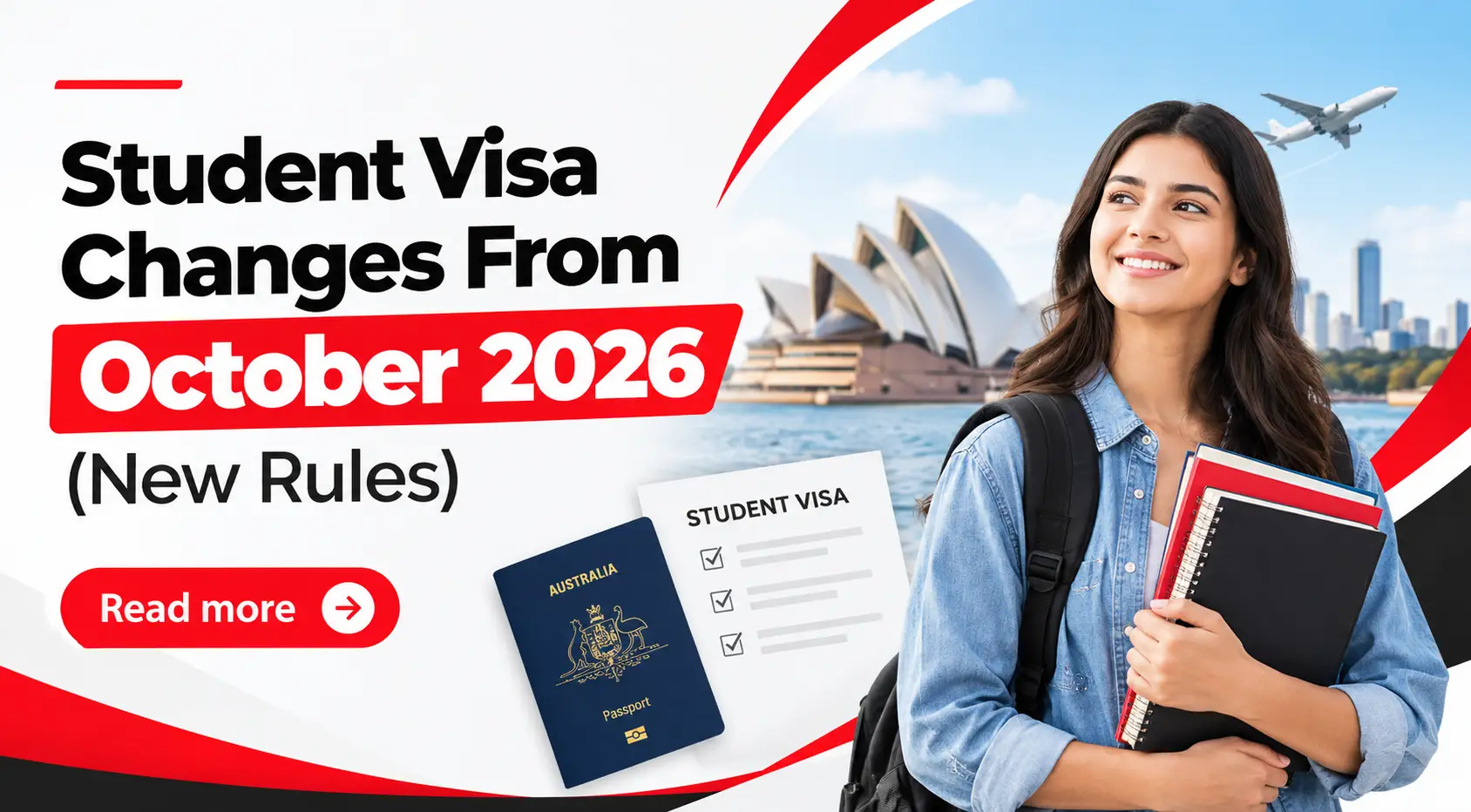
Australia has decided to introduce changes to Student visas on 2 October 2026. These alterations can impact your ability to apply for the visa, who you can bring along and any plans to change course. This is why being updated on the changes to the subclass 500 visa is crucial if you’re planning to study in Australia.
If you are a temporary visa holder or a current student visa holder, you will now have to apply outside of Australia (unless an exemption applies). There are now very limited families that can be included and tighter rules around transferring providers. Below we’ve outlined the changes, who they affect, the new student visa subclass 500 requirements and what international students should do next.
The new conditions are meant for the Student visa (500) and Student Guardian visa (590). From 2 October 2026, there will be new limitations on applying for these visas from within Australia, including for family members. Listed here are the primary student visa rule changes in 2026:
The changes to the Student subclass 500 visa that have come into effect also apply to the student guardian visa subclass 590. Most of the temporary visa holders can not apply onshore for a subclass 590 visa. Alongside this, applicants will not be able to bring in family members unless they meet an exception.
If you are in Australia and hold an eligible visa, you can apply for a Student visa from within Australia under the new AUS visa rules. However, you have to fall under one of these categories:
Most student visa applicants will not be permitted to include their partner or dependent children from 2 October 2026 until there is an exception. Below are the family-member specific exemptions that apply for student visa subclass 500:
| Applicant category | Can partners and dependent children be included? |
| Standard first or further Student visa applicant | Generally no. |
| Doctoral student | Yes, if eligible. |
| National of an eligible Pacific or ASEAN country | Yes, if eligible. |
| Fully funded foreign government scholarship recipient | Yes, if eligible. |
| Student sponsored by DFAT or Defense | Yes, if eligible. |
| Student with family members already included before 2 October 2026 | Possibly yes, in limited circumstances. |
There is limited protection for families who are currently living in Australia under the subclass 500 student visa program. You will be allowed to include the same family members in a new onshore visa application if they were included in your previous student visa. Exceptions might also apply to applicants who lodged their application before 2 October 2026, and the student is eligible to apply for a further student visa in Australia.
If you apply for another or new visa, check the total student visa subclass 500 costs because they may change as per the updates from the Department of Home Affairs. Another important thing to note is that family members cannot be added after the primary student visa has been granted. So, if you are eligible to add family members, both the primary applicant and additional members’ applications should be lodged together.
Current subclass 500 student visa holders are not affected by the 2 October 2026 visa changes. Your existing visa remains valid, and the reforms do not change the conditions or status of a Student visa you already hold. If you want to apply for a student visa for further study, you will have to leave Australia and lodge a new application offshore unless an exception applies.
While the Australia student visa new rules play a decisive role in future decisions, student visa applications lodged before 2 October 2026 will continue to be assessed under the rules applied when they were submitted. This will apply to the first and further Student visa applications, along with applications that already included partners or dependent children.
The Australian government planned to impose these Australian immigration changes to strengthen the integrity of the migration system. More specifically, to curtail visa hopping and protect Australia’s premium international education sector.
From 2 October 2026, Australia has temporarily extended the education provider transfer restrictions from 6 months to 12 months for international non-school students. Until 30 June 2027, you must complete 12 months of your principal course before transferring unless there is an exception. Applicable exceptions include the following:
From 1 July 2027, the restrictions will revert to 6 months.
If your student visa is coming up to its expiry date, do not leave it until the last minute. What to do when your student visa expires depends on whether you have finished your studies, want to continue studying or plan to stay in Australia under a different visa. The first step is to check your visa expiry date and conditions through VEVO.
If you want to continue studying, check whether you can apply for another student visa onshore. You may also seek assistance from a migration agent to explore your available options.
Before you apply for a new or another student visa, check whether you can apply onshore. Alongside this, you should collect all necessary documents for lodging the visa applications.
Make sure you have all the important things from the following student visa document checklist:
Australia’s student visa changes from 2 October 2026 have introduced multiple changes. These include that most temporary visa holders cannot switch to the student visa, restrictions on adding family members, closed subsequent applications and 12-month temporary restrictions for changing education providers.
Check your visa expiry date, confirm whether you can apply onshore and review your family options before enrolling to a course. To know how these changes impact your situation, you can enquire now for your student visa status through a MARA-registered migration agent.
References